When you have a vintage gadget collection, you go with it. (h/t slashdot)
The burning faucet
Sometimes things get so terrible, it’s hard not to laugh. In the Western U.S., journalists have been warning of the horrors of coalbed methane “fracking” for years and years. Now that this drilling process — which stuffs sand, water and a whole bunch of evil chemicals down a bore hole to crack rock so natural gas can escape from it — has gone East, the sorry results are getting fairly big play in the major media. ProPublica has done some of the best recent work on fracking, and now the investigative site tells of the first peer-reviewed journal article to show that fracking near water wells leads to methane levels in drinking water so high that … that faucets can be lit on fire! I’m waiting for the Fox News take on this, maybe O’Reilly saying, “Now look at these liberal academics, spending all sorts of money — some of it probably taxpayer money, your money — to complain about people getting free natural gas delivered to their homes.”
A BS news decision about UBS
 When people say they hate the media, they really mean they hate that the media focus on trivia, pop culture and political sideshows and minimize institutionalized corruption and the stranglehold that wealth has over U.S. government at, essentially, all levels. A prime example is this story, “UBS to pay $160 million to settle bid-rigging case,” which was writ very short and buried in the print newspaper I subscribe to, The Los Angeles Times, and which has this astounding lede:
Switzerland’s biggest bank, UBS AG, has agreed to pay $160 million to settle charges that it rigged the bidding process for investment contracts with cities and towns in 36 states.
The story goes on to explain that UBS folks paid kickbacks to city workers who were responsible for investing bond funds. Sometimes the kickbacks were meant to steer those funds to UBS; sometimes, apparently, UBS was supposed to be acting as an adviser to the municipalities, but used kickbacks and its expertise to steer business to other banks. Bid-rigging across the U.S. by the biggest bank in Switzerland seems, to me, to be kind of a big story. And it’s made even bigger by the story’s kicker: UBS won’t face criminal prosecution because it “admitted to the conduct and cooperated.” I’m sure this outcome — pay a tiny sum of money in the UBS scheme of things, suffer no real public humiliation and avoid criminal prosecution — will deter UBS and every other bank that interfaces with American government from ever paying a kickback again.
I’m not necessarily criticizing the prosecution decisions here; making public corruption cases is difficult, and sometimes less-than-optimum settlements are the best that can be gotten. I am criticizing the LA Times and other so-called mainstream newspapers for grossly underplaying this and other stories that illustrate the sickening power of wealth in the American political system. That tendency to minimize wrongdoing by wealth and power is bad for the country, of course — but it’s even worse for the media. It suggests to readers and viewers that media outlets are not protectors of the people but part of the country’s power structure. It says, loud and clear, that elite journalism is not part of the solution, but part of the problem.
Filed under banking, corruption, legal settlements
Kos I said so
 Mostly I’m off the Daily Kos because so much of it is stretched-to-the-breaking-point rhetoric and sneering nastiness. But every once in a while, the site gets the back to the mix that once made it so fun and readable — facts presented in a wry deadpan — and that keeps me from deleting it from my RSS reader. “George W. Bush saved capitalism. And he got bin Laden too.” is one of those posts. Enjoy.
Filed under politics, presidents
Disruptive Research
 While I was editor of High Country News, my wife and I lived in the tiny (pop. 1,500) Colorado town of Paonia.
It’s a gorgeous place, on the West Slope of the Rockies about halfway between Aspen and Telluride. But it’s also a zillion miles from anything like a city, and there are very few jobs. Luckily, former HCN Publisher Ed Marston introduced my wife to the amazing Dr. Theo Colburn, a zoology professor emeritus who runs an amazing Paonia-based nonprofit called TEDX, or the Endocrine Disruption Exchange. Theo was kind enough to hire my wife. TEDX collects and disseminates research on chemicals that interfere with reproduction in some way, and it has just released a wonderful database of research into more than 1,300 of these compounds. If you’re interested in BPA and other chemicals that appear to have untoward effects on human development at very low doses, you’ll want to go here and download the spreadsheet.
Filed under Uncategorized
Grist for Thought
Over at Grist, Lisa Hymas has written an informed and informative piece on Ron Paul vis a vis energy and the environment. It’s also admirably nonideological; Hymas simply notes the ways in which Paul’s quirky type of Libertarianism sometimes does and more often doesn’t match up with the concerns of the Environmental Movement writ large/general. Much of the piece is a roundup of what others have written but it’s a quality roundup, and includes a nice quote from a previous Grist interview of Paul: “I don’t ride my bike because I think I’m destroying the environment by driving my car; I ride it because it’s a great way to be outdoors and enjoy the environment.”
Filed under Uncategorized
Where’d you think he went, to the movies?
This is a funny idea that is also brilliantly executed. And with a name like “OsamaInHell,” it’s sure to be a viral hit for many a moon . http://twitter.com/#!/OsamaInHell
Filed under Uncategorized
In the Abstract, #1,225 and #1,226
There’s real competition in the race to be named academic abstract of the day. The titles of the two leading competitors alone should give you some idea of the difficulty in choosing between them:
1) “Social Category Salience Moderates the Effect of Diversity Faultlines on Information Elaboration”
2) “‘I don’t f***ing care!’ Marginalia and the (textual) negotiation of an academic identity by university students”
The prose within the abstracts is equally compelling. Parse the perfection of this sentence: “In line with our hypotheses, social category salience moderated the effect of faultline strength on elaboration.” Now, try to say it is not surpassed by this: “Drawing on discourse analytic concepts such as ‘footing’ and ‘stake’ this article seeks to understand what student marginalia can tell us about the ways in which the tension between ‘doing education’ and ‘doing being a student’ is managed and negotiated in sites other than the university tutorial.”
I’m at a loss to choose. Go here and here to read the full abstracts. And then come back and give me some help.
Filed under Uncategorized
Coll’s Cull
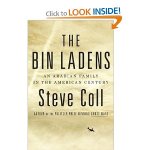 Amid the overwhelming crush of Osama-is-dead reportage and analysis, I’ve run into two posts that were truly helpful in creating as much clarity as possible in an inherently foggy situation. The first is ProPublica’s “Bin Laden Reading Guide,” an extraordinarily detailed and nuanced directory of the best of the bin Laden coverage so far. I am in awe of the two bloggers who put this clean, clear and useful package of links together. They must read the InterWebs in their sleep. Among the links they mention is “Notes on the Death of Osama bin Laden,” Steve Coll’s post for the New Yorker. The headline is typical New Yorker understatement; Coll has written a well-regarded book on the bin Laden family and many New Yorker posts and articles on intelligence and national security, especially regarding the Middle East. These “notes” are actually a distillation of what a highly intelligent and well-backgrounded journalist has learned over many years, as applied to the current situation regarding al Qaeda and Pakistan. If you had time to read nothing else and wanted a deeper understanding of the demise of bin Laden, this would be the piece to pick.
Filed under Uncategorized
Tap Tap
Marc Armbinder was a pretty good Atlantic politics blogger. He’s a lot better over at National Journal, if this piece on how the bin Laden killing went down is any indication at all. I could go through the piece line by line and praise all the writerly flourishes that are thrown in as Armbinder gives a level of analysis and context that no other reporter cames close to matching today. But you only need to read one sentence to understand what I mean:
“One of the dead was Osama bin Laden, done in by a double tap — boom, boom — to the left side of his face.”
Here‘s the rest of the piece, which really is worth reading in entirety.
Filed under terror, Uncategorized
 John Mecklin, writer/editor