I just got this smashing voodoo doll, direct from New Orleans, where voodoo dolls are made to work. Hmmmm…
I think I’ll go with it.
I just got this smashing voodoo doll, direct from New Orleans, where voodoo dolls are made to work. Hmmmm…
I think I’ll go with it.
Filed under voodoo dolls
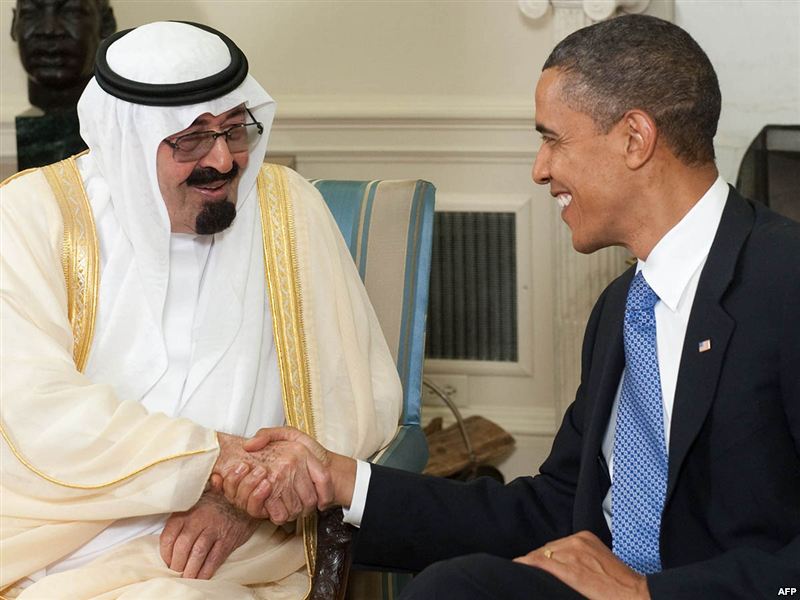 Just in case Congress, Standard and Poors, the markets and Michele Bachmann aren’t keeping your internal anguish meter at maximum reading today, I offer you a truly frightening prospect: Iran gets the Bomb — and Saudi Arabia gets one, too. It is, unfortunately, a very likely prospect. Pervez Hoodbhoy, probably the best known physicist in Pakistan, explains why in a fascinating piece “What Next: A Sunni bomb?” It’s a scary tale that, like so many emanating nowadays from the Middle East, revolves around the Sunni-Shia division in the Muslim world and the days of Charlie Wilson’s war to drive the Soviets out of Afghanistan. The bottom line: Shia-led Iran and Sunni Saudi Arabia are vying for leadership of the Middle East. If Iran gets the bomb (which it almost certainly will), Saudi Arabia will almost certainly follow — with technical help from Sunni-led Pakistan, an exceeding close Saudi ally ever since the US, Saudi Arabia and Pakistan worked together to fund al Qaeda’s efforts against the Soviet Union in Afghanistan. Sweet dreams.
Filed under nuclear weapons
I tend not to link to the NY Times because I know smart people read it as a matter of routine, and you, gentle readers, are among the smartest in existence. But in the Sunday Times, Drew Westen offers a truly distinguished explanation of President Obama’s signal failure — the failure to tell the American people the story of the man-made disaster that has befallen them, and how they will transcend it. I have great admiration for the Times’ Week in Review (even if I find no benefit in it’s new name, Sunday Review), but Westin’s piece, “What Happened to Obama,” operates several levels above the average Review piece, melding history, psychology and practical politics (trained in the psychological sciences, Westen has of late been paying the rent as a “messaging consultant to nonprofit groups and Democratic leaders”) in a piercing and absolutely convincing argument that Obama has failed the first duty of leadership: storytellng. After explaining, in a historical/evolutionary context, why it is that subjects expect their leaders to explain the world in a narrative format, Westen offers this story that I (and I suspect a vast majority of Americans) have longed to hear from the presidential podium:
“I know you’re scared and angry. Many of you have lost your jobs, your homes, your hope. This was a disaster, but it was not a natural disaster. It was made by Wall Street gamblers who speculated with your lives and futures. It was made by conservative extremists who told us that if we just eliminated regulations and rewarded greed and recklessness, it would all work out. But it didn’t work out. And it didn’t work out 80 years ago, when the same people sold our grandparents the same bill of goods, with the same results. But we learned something from our grandparents about how to fix it, and we will draw on their wisdom. We will restore business confidence the old-fashioned way: by putting money back in the pockets of working Americans by putting them back to work, and by restoring integrity to our financial markets and demanding it of those who want to run them. I can’t promise that we won’t make mistakes along the way. But I can promise you that they will be honest mistakes, and that your government has your back again.”
Westen points out, rightly, one of Obama’s largest narrative failures — the failure to explain who the bad guys are, and how they are going to be brought to justice — and ends the piece with a brilliant series of hypotheses, each less flattering than the last, about why Obama “seems so compelled to take both sides of every issue.” I won’t explain them here; you really must read this whole piece to understand their full brilliance. But in an attempt to get you to go read this article, I will leave you with its kicker, which plays off the Rev. Martin Luther King’s assertion that the long arc of history bends toward justice, and which is thrilling in its denunciation of the deformed compromise that threatens to become the hallmark of the Obama era:
“But the arc of history does not bend toward justice through capitulation cast as compromise. It does not bend when 400 people control more of the wealth than 150 million of their fellow Americans. It does not bend when the average middle-class family has seen its income stagnate over the last 30 years while the richest 1 percent has seen its income rise astronomically. It does not bend when we cut the fixed incomes of our parents and grandparents so hedge fund managers can keep their 15 percent tax rates. It does not bend when only one side in negotiations between workers and their bosses is allowed representation. And it does not bend when, as political scientists have shown, it is not public opinion but the opinions of the wealthy that predict the votes of the Senate. The arc of history can bend only so far before it breaks. “
Filed under 2012 election, politics, presidents
When you have someone who wants to build a nuclear reactor in his kitchen , you just go with him. Even if he’s Swedish. Especially if he’s Swedish.
Filed under Uncategorized
In general, I think Barack Obama has done a remarkable job as president during a time of unprecedented economic, security and political challenges. That’s to say, I disagree with some specific policies he’s followed — chiefly, the decisions to send additional troops to Afghanistan and, post-bin Laden, not wind down the war there very quickly — but think him a steady, strategic thinker and doer. Most Republicans, of course, have an entirely different view, but I find many and even most of the policy objections coming from Obama’s right insince re, disingenuous. At base, it seems to me that Republicans do not differ with Obama’s policies, which are quite moderate on the whole and even a shade toward the right here and there; they object to his existence. They simply want a Republican president and, it seems, will go to almost any length to get one. There are also objections to Obama’s leadership that come from his left. Most of them I put in the Unicorn League folder — meaning they complain that Obama hasn’t done something that will be accomplished only when the huge and secret population of publically spirited unicorns comes out of hiding and parades in neat rows from the White House to Capitol Hill. But here’s a post sent along by a friend about the “Barackholm Syndrome,” making a clever point that deserves at least consideration. That is: Has the scope, unanimity and persistence of the Republican opposition to anything — anything! — the president wants affected his psyche and made him less willing or able to press his own agenda aggressively? Going this intellectual route, of course, risks descending into psychobabble. Still, I thought the post by Robert Hall fascinating and worth a read (h/t Terry O’Rourke).
Filed under politics, presidents
 I started working as an editor for the Bulletin of the Atomic Scientists about three weeks ago. I knew I’d be editing leading scientists and dealing with complex subject matter. And I knew that the Bulletin, founded by experts who had created the atomic bomb as part of the Manhattan Project, had an interesting history that included a National Magazine Award for General Excellence and, of course, the Doomsday Clock, reset each year to say how many minutes the world is away from midnight, aka nuclear armageddon. But I didn’t really know the prominence of so many people associated with the Bulletin. I didn’t know, for example, that the magazine’s Board of Sponsors includes, if I count correctly, 19 Nobel laureates, or that the Science and Security Board reads pretty much as a Who’s Who of the entire scholarly and governmental world of, well, science and national security. I also didn’t know just how ubiquitous the Doomsday Clock is. It seems as if everyone I tell about my new place of employment answers with some variant on, “Oh, that’s the place with the Doomsday Clock, right?” And as if to emphasize the enduring appeal of the clock, the newyorker.com’s News Desk posted this charming item today, “Clocks and Countdowns,” which compares the silliness of an ABC.com clock that counts down to federal default (“an overeager Hill intern logging the smirks and groans of everyone in a suit”) to “the wise, professorial father” that is the Doomsday Clock. “From the perspective of the Bulletin of Atomic Scientists, we think about very big, serious questions every day, and try to prevent the worst from happening,” Bulletin executive director Kennette Benedict, a personage of note herself, having directed the international peace and security program at the John D. and Catherine T. MacArthur Foundation, is quoted as saying. I’m trying to think of downsides to a job that involves working with extremely smart people who are trying to — literally, practically — save the world. I’ll let you know if I come up with one.
Filed under Uncategorized
Even though calling jellyfish pigeons of the sea is a compliment to the jellyfish, when you get a see-through picture of one, sometimes you just say, “oh, what the hell” and g o with it.
Filed under Uncategorized
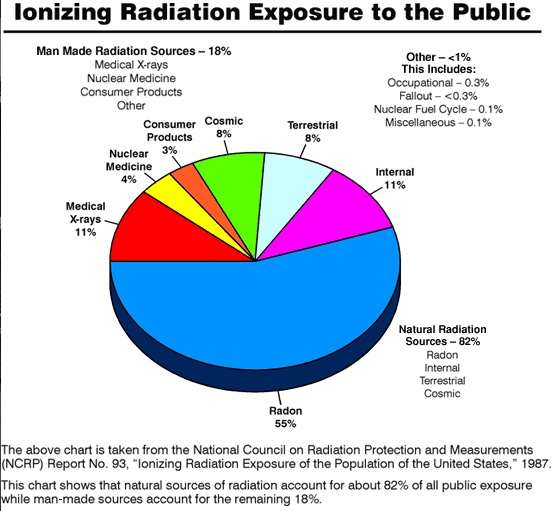 In the wake of the Fukushima nuclear disaster, one can hear the cable chatterers and other newspeople talking about radiation and its connection to cancer is a dizzying number of ways, many and perhaps most of them extremely ill-informed. Particularly, the notion of a “safe” dose of radiation is bandied about, usually in reference to what the government says a “safe” dose is. A lot of research has been done into the health affects of radiation since atomic bombs ended World War II, but actually, the harm done — or not done — by small doses of radiation remains a question unanswered. But don’t take my word for it; here’s a brilliant explanation of this mystery by the director of the Center for Radiological Research, at Columbia University Medical Center. Read it, and you will know more than you did before — even if you thought you knew what you thought in regard to nuclear energy and radiation, post-Fukushima. Very small doses of radiation may be dangerous if distributed over large populations. Or they may not. It’d be nice if, amid its current budgetary insanity, the Congress were smart enough to fund the research that will tell us what we have to fear, or not fear, from future Fukushimas and the all but inevitable event of radiation-related terrorism.
Filed under nuclear energy
 You could put this one in the “no good deed goes unpunished” file, or simply roll your eyes, sigh and mutter “Louisiana” on the exhale. If you read my last post, you know my brother in law, Folwell Dunbar, is a public-interest hero. While working at the Louisiana state agency that regulates charter schools, Folwell reported being offered a $20,000 bribe by someone apparently connected to Abramson Science and Technology Charter School in New Orleans, which he was in the process of auditing. Folwell turned down the bribe and did exactly what a good public servant should do — he wrote a report documenting the offer, and he reported the attempted bribe to the police. During the audit, he found the school had been grossly mismanaged and recommended that the state board of education take away its charter.
The state did nothing for a year, but then the New Orleans Times-Picayune dug up Folwell’s report via a public records request and wrote a story about it. Suddenly, the state decided it was time to suspend the school and investigate its performance.
But because this is Louisiana, Folwell did not receive the award or promotion he deserved for doing his job well and ethically and bringing a problem to light in the proper way, so it could be dealt with. Instead, a few days after the original Times-Picayne report (which, by the way, Folwell had no role in inspiring), he was fired with no real explanation. Here’s how the Times-Picayne put it:
Folwell Dunbar, a state education official who warned of problems at Abramson Science and Technology Charter School more than a year ago, confirmed Thursday that he was fired this week along with his boss at the department, Jacob Landry. The two were let go amid a new state investigation at Abramson prompted by fresh revelations about what Dunbar and other experts found during an audit of the school carried out in April and May of 2010. State records show Dunbar let his colleagues know last year that someone associated with the school tried to offer him money during the audit, an incident that brings to light the connections that Abramson apparently shares with Turkish-run businesses and charter schools in other states. He concluding [sic] that Abramson was at the very least “terribly mismanaged” and recommended that the state board of education take away its charter. … [Acting state Superintendent Ollie] Tyler provided few details behind her decision to fire two department officials this week. She did not mention their names and only cited a need for “new direction and leadership” at the department’s charter school office.
Although what I’ve described looks bad enough, there is more here than meets the eye. This Abramson outfit seems to be part of an odd operation in which a number of apparently connected Turkish groups have gotten approval to run charter schools across America, some 120 of them. The New York Times has been investigating this remarkable indication of the international superiority of Turkish educational practices. I have heard indications that the FBI is investigating, as well, and if it isn’t, it should be.
Folwell Dunbar is a highly educated, deeply experienced, enormously dedicated educator and exactly the kind of person America needs in the trenches as it attempts to retool its educational systems to serve the country in an age of technological flux and international competition. In responding to this inappropriate and senseless firing, he has been his usual classy self, issuing a polite statement that says he is “terribly shocked and disappointed” by the way he’s been treated but proud of the post-Katrina education reform efforts he’d helped institute in Louisiana. He also called on the state to improve oversight of charter schools in a number of specific ways, all of which are desperately needed.
What’s happened here is an outrage, and I’d be saying so even if Folwell weren’t a brother-in-law and friend. But what’s an outraged person to do? Well, this post could be passed all around the social media web, so more people learn of the outrage, so more brains can think about good ways to respond. Also, as of this writing, the comments section under the Times-Picayune story on the firing is still open, and although I hate to attack messengers, the paper has not done its job well in reporting this grotesque firing, failing to push state officials (all the way up to Gov. Bobby Jindal) hard enough for an explanation and then failing to quote any kind of a good-government expert or group as to their thoughts about this obviously unethical retaliation. Of course, an outraged person and his friends might also fill up the email in-boxes and voicemail caches of Gov. Jindal — who keeps riding a reputation of being some kind of Mr. Clean in the swamp — with complaints about the hypocrisy of an administration that claims a reform agenda but cynically punishes the best and brightest of those who are trying to make reform a reality.
But I’m sure you can think of a response that’s even more effective than any of these. You’re smart. You read my blog. Thanks for your help on this.
Filed under corruption, education
There’s a strange and still-mysterious scandal in which some number of apparently connected Turkish groups have gotten approval to run charter schools across America, some 120 of them. The unusual nature of the “Turkish school” movment made the big-time news first in Texas, courtesy of the New York Times, which noted that although much of the opposition to the Turkish charters was based on good old-fashioned American xenophobia — the schools tend to employ Turkish teachers — the trend also raised financial questions. Those questions are a bit more prominent now because of an estimable package of stories in the New Orleans Times-Picayune about Turkish charter schools in Louisiana. The package is not just estimable, it has one of my relatives cast in the role of public-service hero, brother-in-law Folwell Dunbar (picture below). Here’s the bottom line from the T-P:
Inci Akpinar, the vice president of a company called Atlas Texas Construction & Trading, sat down with an official from the Louisiana Department of Education a little more than a year ago and made him an offer. As the state official, Folwell Dunbar, recalled in a memo to department colleagues, Akpinar flattered him with “a number of compliments” before getting to the point: “I have twenty-five thousand dollars to fix this problem: twenty thousand for you and five for me.”

At the time, Dunbar was investigating numerous complaints against Abramson Science & Technology Charter School in eastern New Orleans, which shares apparent ties to Akpinar’s firm as well as charter schools in other states run by Turkish immigrants. In fact, state auditors had already turned up startling deficiencies at Abramson. The records they kept of unannounced visits to the campus, as well as interviews with former teachers, paint a chaotic scene: classrooms without instructors for weeks and even months at a time, students who claimed their science fair projects had been done by teachers, a single special-needs instructor for a school of nearly 600.
Dunbar — having declined to take money from Akpinar — recommended more than a year ago that the state board of education yank Abramson’s charter. But the board ultimately stopped short of closing down the school, giving it a year to shape up under a “corrective action plan.”
Folwell also reported the bribe attempt to New Orleans police, and now the state has finally agreed to close the school and investigate. Those who haven’t dealt intimately with government have no idea how hard it is to do the right thing in these types of circumstances. All the peer pressure pushes in the direction of inaction and going and getting along. And let’s not forget, this happened in Lousiana. Ordinarily, because I try not to miss a chance to give Folwell a hard time, I’d make a sardonic brother-in-law joke here. This time, I think I’ll just sit back, read the story again, and be proud.
Filed under corruption, education
 John Mecklin, writer/editor