Appropos of nothing, particularly, here’s the bad-quality video and wonderful sound of Gore Vidal v. Wm. F. Buckley Jr., 1968. Enjoy the civilized bile.
Joe Ely and hard livin’
OK, just because it’s Thursday, here’s some great Joe Ely. But don’t expect this every Thursday.
Filed under music
World Peace to all

Friends who are not NBA fans or Los Angeles residents may not know that the L.A. Lakers’ Ron Artest — who in a 2004 gig with the Indiana Pacers charged into the stands because a cup of beer had been thrown at him, sparking a gigantic player-fan fight that led to $11 million in fines against 9 players — has a new name. It is Metta World Peace. His jersey even says “World Peace” on the back.
But Metta’s the same old Artest when it comes to generating non sequiturs, as this Los Angeles Times story shows. I kind of like Artest/Peace, but I really like it when he talks to reporters. I’ll give you two examples of his conversational gifts:
“[T]here’s his response to a reporter who inquired about some teammates calling him Ron and others Metta: `Well, I’m just happy that Jesus Christ, um, did not let me lose my teeth when I was 20 years old.’ “
“[H]is view on all the trade rumors involving the Lakers: `I’ve been more focused on the Herman Cain presidential campaign this year,’ he said. `I want some Godfather’s Pizza.’ “
But you have to read the LAT piece to get the full effect of World Peace in the holiday season. Ho ho ho.
Changing the climate change discussion
 If you’re the type who wonders why self-serving flapdoodle is winning the climate change public-opinion contest, I think you’ll enjoy reading through a roundtable that just finished up over at the Bulletin of the Atomic Scientists. Princeton’s Rob Socolow (of climate change wedges fame), Roger Pielke of the University of Colorado and the Cooperative Institute for Research in Environmental Sciences (CIRES), and former marine biologist turned provocative Hollywood filmmaker Randy Olson have had a varied conversation that makes one overarching point: It’s harder than one might think to counter distortion of science in the public arena.
I’m not going to recount their generally brilliant essays; you can read them here. (To comprehend the conversation as a whole, I suggest starting at the bottom and reading up, as the essays are posted in reverse chronological order, i.e. most recent first.) I do think it worthwhile to restate a point I’ve made previously. I could reword it here, but I kind of like what I wrote before:
I do believe that the large environmental nonprofits — the Sierra Club, the Environmental Defense Fund, Audubon and others — need to take some of their huge income streams and devote significant chunks of money directly to the task of making climate change uncool and stupid, in the way that cigarette smoking has been made dumb and unhip. Congress won’t aggressively act on climate change until public attitudes strongly support action. The ability of advertising — funny, smart, hip, multi-platform advertising — to change attitudes, and particularly political attitudes, has been proven, over and over again. … It’s time for the environmental lobby to pull money out of Washington and put it into a major, long-term, brilliant ad campaign focused on the most conceited, mean, greedy and uncool kid in school: Carlyle Dioxide.
The fossil fuel energy entities that have been pushing the idea that the science of climate change is horribly uncertain — perhaps even fraudulent — use expert communicators (often politicians) and expert means (slick ad campaigns and a full-court media press) to get their message across to the public. There is a full-fledged public relations campaign afoot, and it has persuaded many Americans that climate change is a mirage ginned up by pointy-headed academics and other crafty liberals to further the twin goals of undermining The Free Enterprise System and Ayn Rand’s reputation.
To explain the overwhelming scientific consensus that climate change is real, caused by humans, and a major threat to the planet, we have had … Al Gore and a bunch of scientists who are, by and large, unskilled in communicating with a general public. By all mean, let’s work to improve the communication skills of scientists. But let’s remember something: Scientists are and should be primarily creators of knowledge. Conveying that knowledge accurately to the general public is the job of others, including the media, of course, but also the advocacy groups that supposedly believe in the science underlies their causes.
Filed under Uncategorized
Bloom’s off
I don’t know how much more of a caricature Stephen Bloom can make of himself. This professor at the University of Iowa writes an Atlantic piece that waxes slightly sarcastic about his adopted home state. The rubes of Iowa complain, sometimes in crude ways that verge on anti-Semitism, as rubes across America are wont to do when their cherished misconceptions are challenged. Professor Bloom starts expressing fear for his life (even though he’s not in Iowa) in a way that lets Jim Romenesko depants him without unhooking a belt or pulling down a zipper. And now he’s in “an undisclosed location,” comparing his journalistically courageous self to Jack London, James Agee, H.L. Menken, Grant Riceland, Marvel Cooke, Jim Murray, cartoonist Paul Conrad, Tom Wolfe, Mike Royko, and Hunter S. Thompson–and then in the next breath saying he’s “nowhere even close to any of these titans.”
Which is undeniably true. The level of self-parody is ably illustrated in this paragraph:

“When [the negative feedback] involves my family I feel absolutely horrible, and when my wife had to get that [lampshade] phone call, I felt like vomiting. But I knew as a journalist, stepping into writing this provocative post, that there would be problems. …That’s the nature of the business.”
If you want to read more of his self-pitying, grandiloquent, and purple prose, go here.
Filed under Uncategorized
A better jobs report
It always surprises me the short, perfuntory shrift that most newspapers give to labor and employment news, even at a time when the national mind is almost entirely focused on one word: jobs. This piece in the Washington Post typifies what I’m talking about. There’s nothing “wrong” in the piece, but it doesn’t give enough context for a reader to understand what the bottom line actually is. And the bottom line is that the economy didn’t necessarily add the dismal 80,000 jobs the Post and most newspapers have fixated on; the economy added somewhere between 80,000 and 277,000 jobs, depending on which survey you’re looking at, and the number is likely much higher than 80,000, if the trend of recent jobs (under)estimates continues. I’m not saying the jobs situation is rosy; I’m saying it’s more positive than is being conveyed in most daily media, and could be even rosier, if Republicans hadn’t killed a jobs bill that would’ve funded employment in state government. And why am I saying that? Entirely because of this remarkably concise, interesting and well-illustrated post 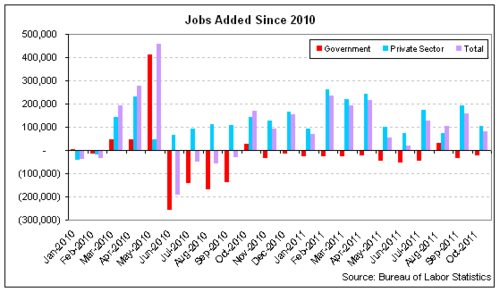 by Daniel Indiviglio over at The Atlantic, which continues to impress me with the depth of expertise it is managing to recruit and wind effortlessly into the Atlantic’s online offerings.
Filed under economics
A climate change discussion that won’t bore you to death.
 So what should scientists do when politicians make provably false statements about climate change (see: Rick Perry) and other scientific issues? My employer, the Bulletin of the Atomic Scientists, is hosting a pretty good/lively/funny roundtable on this very question. And I’m not kidding; humor is included. In today’s entry, former scientist and current Hollywood filmmaker Randy Olson (who’s also the author of the book Don’t Be Such a Scientist*) gives the public opinion battle between climate change scientists and climate change deniers a name: “Cub Scouts versus the Mafia.”
You really might LOL. Take look.
* Here’s the opening paragraph of a review of Don’t Be Such a Scientist from The Times Higher Education site:
OK, here goes. I’m going to write this review in the style suggested by Randy Olson. This means that I’m going to use my penis. Not literally, you understand – that would be exhausting, anatomically complicated and likely quite illegible. Blame Olson for that mental image, by the way. I’m only following his advice – for this is the opening gambit of Don’t Be Such a Scientist: the suggestion that scientists should stop intellectualising everything they communicate. Sometimes you need to stop using your head and just get it out there, he suggests. For good communicators, the power of expression comes from the heart, from the guts and yes, sometimes even the “lower sex organs”, if I understand him correctly.
Filed under Bulletin of the Atomic Scientists, environment
The missing filibuster
I’m rushing a bit today and don’t have a lot of time for comment, but Jim Fallows has been on a tear over at the Atlantic about the major media’s inaccurate reporting on President Obama’s jobs plan, pointing out that they keep saying it has “failed,” in whole and in parts, when actually it has been the victim of a long-running, unprecedented Republican strategy to filibuster any bill that might possibly benefit Democrats or the president. His explanation of why the media approach to this obstructionist strategy is just … plain … wrong makes compelling reading (much more compelling than anything I could possibly tap out today — or, likely, any time). Perhaps more compelling is the entire string of Fallows’ posts on this subject; if you have time, you should follow them out, which is easy to do from the post I’m highlighting. If you do, you’ll realize that Fallows is not writing inside baseball; he’s setting out a significant, repeated failure of major media to tell the truth. That failure has already had enormous impact on the country and could well have ramifications for who wins the presidency in 2012. I’m not quite ready to say the missing filibuster reportage is the equivalent of the media’s failure to question the Bush administration’s WMD justification for going to war in Iraq. But I’m not ready to rule out an equal sign here, either. And for those of you who wonder: This is not about ideology or partisanship. It’s about a failure of news organizations to do their job that leads to an unfair ideological/partisan advantage.
Filed under media
Requiem for the alternative newsweekly trade organization. Long live the alt-weekly!

 For some time, I’ve been meaning to note a recent change in the news media that went all but unnoticed. But for weeks I never got around to it; other duties got in the way, and then I began to wonder whether the change were even worth remarking. My thought processes may reflect some of the reason the change went largely unnoticed in the media at large. They may have thought it not only insignificant, but irrelevant. What was once the proud training ground for many of the country’s best magazine and book writers — the alternative weekly — had been so subsumed by the rise of the Internet as to need to change the name of its trade association. What had been the Association of Alternative Newsweeklies became the Association of Alternative Newsmedia, meaning, of course, that online-only publications were now allowed to join.
The forced joining of the words “news” and “media” into one may have kept the organization’s acronym — AAN — the same, but the new moniker is a reflection of a new world in which alternative weeklies have a real problem: What, exactly, are they an alternative to? It used to be the monopolistic daily newspapers in their towns, but both the city dailies and the city weeklies have literally been taken apart by the digital revolution, with whole classes of advertising migrating online where, by and large, dailies and weeklies have been late to the revenue and technology party.
Much of what had been staples in the bag of alt-weekly editorial tricks — event listings, music coverage, restaurant reviewing, smart-aleck attitude, general (though not universal) leftyism — was also undermined, coopted, replicated, done better or made obsolete by the rise of a host of online competitors, from the lightly staffed city observer sites (SFist, Gothamist, etc.) to Yelp to Gawker and on and on and on. In the lingo of the trade, the alt-weekly was unbundled, disaggregated, knee-capped by the kind of entrepreneurial twentysomethings the founders of many an alt-weekly had been, once upon a time, back in the historical mists of the 1970s.
But what was actually important about alt-weeklies — and what the best of their founders were most interested in — has not yet found solid competition on the internet. Over the last four decades, the alternative weekly has been the training ground where the country’s smartest and most inventive aspiring writers learned how to accomplish intelligent, long-form journalism. Even now, every year, significant narrative and investigative work at alternative weeklies wins major journalism awards and serves the public interest in many ways. The Village Voice Media group of alt-weeklies has had a long and deep commitment to quality long-form nonfiction, as have other surviving papers, including, notably, the Chicago Reader and the Washington City Paper.
There is a real question, however, whether alternative weeklies are going to be able to continue to fund the kind of long-term hanging around — the fly-on-the-wall waiting for guards to fall sometimes called immersion journalism — that distinguished narrative journalism requires. I was editor of SF Weekly some time back and had the resources to cut a writer loose for 13 months on a single project. The project won a Polk Award, an Investigative Reporters and Editors certificate and lord knows how many other awards for the writer, Lisa Davis. Some 10 years later, Davis has had a pretty good book published by a major publisher (Scribner). (It is called The Sins of Brother Curtis, if you care to check it out.)
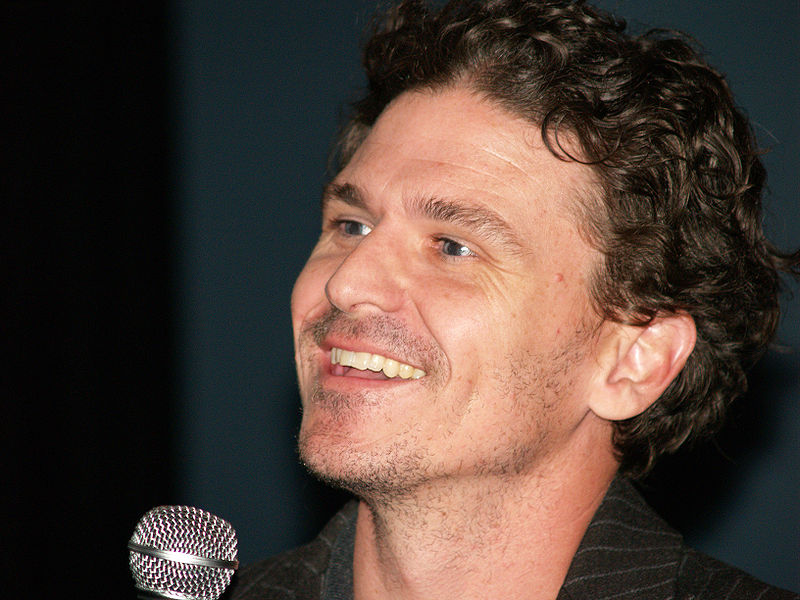
And this is my point: Alternative weeklies have been the place to begin and learn the basics for countless writers who have gone on to bring beautiful, engaging and important work to the public. There are the names everyone knows because they are so regularly in the news (The New York Times‘ David Carr, Reuters media columnist Jack Shafer), but there are many, many more. New Yorker staff writer, Pulitzer winner and MacArthur “genius” fellowship recipient Kate Boo, who wrote for Washington City Paper early in her career. Susan Orlean, who wrote for an alt-weekly in Portland, Ore., the Boston Phoenix and the Village Voice before she became a New Yorker staff writer and major author. Nick Lemann, dean of the Columbia Graduate School of Journalism and a staff writer at the New Yorker, started his journalism career at a now-defunct New Orleans alt-weekly called the Vieux Carre Courier. Slate editor David Plotz came from the Washington City Paper. Mother Jones co-editors Clara Jeffery and Monika Bauerlein have alt-weekly roots (at Washington City Paper and Minneapolis/St. Paul’s City Pages, respectively). Hell, Dave Eggers — certainly one of the brightest of America’s current literary lights, by any standard — did a comic strip and wrote the occasional brilliant story for SF Weekly in the era immediately preceding mine.
I’m not saying all alt-weeklies are going to stop doing good journalism because their trade group changed its name, and I’m not pounding nails into some supposed coffin of the alternative weekly as a genre. Many weeklies no doubt make money (although one suspects it is small money in comparison to times past), and some have put some effort into expanding their online efforts. (Village Voice, in particular, has created a Craigslist-like franchise that it calls “Back Page” and that, I have read, earns the company eight figures a year.) But the alt-weekly staff cuts just keep coming and coming — I doubt the world will again see an alt-weekly fund a 13-month investigation — and one wonders how long those long, long alt-weekly stories will keep flowing, particularly as more of the business moves online, where revenues are low and the 5,000-word story is often viewed as not just uneconomical, but ludicrous. Although I’m sure there’s an exception to what I’m about to write that someone will email me about very soon, by and large the only thing a valued online journalist is expected to immerse himself in is the screen in front of his face and, perhaps, the phone next to it. Weeks of in-person, on-scene reporting to produce a fully rounded piece of evocative, interesting, important journalism is just not the Internet way, at least to date.
Which brings me to my point: Alternative weeklies are a treasure, and each of them holds a treasure-chest full of long-form journalism in its archives. With the advent of the iPad and other tablets and the Kindle, the Nook and other e-readers, those archived stories could be packaged into e-books, as The New Yorker is doing with After 9/11, a compilation of stories from the decade after the terror attack that has an introduction by editor David Remnick. Imagine compilations of work from star writers at the Village Voice (on municipal corruption, perhaps) and the Washington City Paper (on race, perhaps).
And there is no reason to vend only the past. New long-form work that is distinguished enough can be sold as “singles,” and it’s happening right now at Amazon, with “Kindle Singles.” There are a whole passel of online startups — the Atavist comes to mind — that deal in some way with selling long-form nonfiction pieces individually via the Internet.
The alternative weekly industry holds the institutional memory for one of America’s most valuable journalism training grounds. That training ground needs to be preserved and transferred into the digital world, somehow. For that to happen, the alt-weeklies’ signature work needs to be monetized online. I am not smart enough to say exactly how that ought to happen, but I do think the owners of newsweeklies ought to consider partnering with an entity that would package, market and sell their long-form work (ala hulu.com, the video site “operated independently by a dedicated management team with offices in Los Angeles, New York, Chicago, Seattle, Tokyo and Beijing. NBCUniversal, News Corporation, The Walt Disney Company, Providence Equity Partners and the Hulu team share in the ownership stake of the company.”)
But that is just one idea for keeping the lights on at one of the best training grounds for in-depth journalism in America. I’m open to others, and offer one in closing this blog post, which I’ve purposely written way, way too long to suit the common Web wisdom on blog posts, just because I’m an alt-weekly alum and I can go on as long as I damn well please: Next time you walk past the newsbox for your city’s alternative weekly, pick one up. Take it home. Leave it on the coffee table long enough that you eventually read the longer piece or pieces in it. You’ll be helping to keep an alt-weekly financially healthy (yes, the papers are free, but the owners track how many are picked up and use the information in setting ad rates) and you just might stumble across one of America’s next great writers.
Filed under media
We have no seasons here. But it’s still fall.
It’s a brilliant, blue-sky, perfect-temperature fall day in Santa Barbara, but fall here isn’t like fall in non-paradisiacal places. Ergo, when you have a photo of a sugar maple turned red next to a 20-foot-tall yucca, both of which frame Hollywood-esque palm trees in the background, you just have to go with it.

Filed under You go with it
 John Mecklin, writer/editor