Appropos of nothing, particularly, here’s the bad-quality video and wonderful sound of Gore Vidal v. Wm. F. Buckley Jr., 1968. Enjoy the civilized bile.
Category Archives: politics
Some things to occupy yourself with
Although I think the Bulletin of the Atomic Scientists a wonderful publication, it is undeniably specialized and wonkish. If you want the most in-depth, expert information available on existential threats to life on Earth, the Bulletin is where you go. You do not go to the Bulletin for critical assessment of a Lady Gaga performance, much as I like Lady Gaga.
 Because this blog generally deals with subject matter somewhere between Gaga and Doomsday, I do not link to all of the Bulletin‘s content by any means.But this piece, by Mark Cooper of the Center for Energy and the Environ-ment at Vermont Law School, raises important questions, such as: Why is the US government acting as the unlimited liability insurer for the nuclear industry, putting taxpayers on the hook for damages that could exceed $1 trillion in a single nuclear accident? This is an important story that market-based, conservative publications (do you read me, Wall Street Journal?) ought to pay particular attention to.
And as long as we’re talking about Wall Street and ridiculous govern-mental subsidies for well-connected industries, I thought I’d link to this stirring video from Occupy Everything. (I tried to embed the video, but the code just won’t work, alas.) I’m not anti-capitalist, but I am pro-fairness, and the system has tilted too far toward the wealthy one percent, and too far from the rest of us. I understand why people have gone to occupy Wall Street. I hope they stay for an unreasonably long time
.
Filed under nuclear energy, politics
Where to stick your class warfare
If you don’t know Elizabeth Warren, or don’t think she’s going to be the next U.S. senator from Massachusetts, you haven’t seen this video, which puts the “class warfare” schtick the Republicans have been retailing of late into a Mixmaster and pushes the “puree” button. (h/t Greg Sargent/Washington Post).
The Tea Party’s Nikki Haley parties like it’s midnight in Paris
 If, as the talking heads of Fox News like to insist, the nation’s national media are overwhelmingly liberal, why is it that they trumpet “rising stars” of the Tea Party, often based on little but good looks or a decent way with left-baiting speech-making, but ignore horrid, seemingly corrupt behavior that goes against everything the Tea Party supposedly believes in? After all, the Tea Party doesn’t profess to believe in giveaway crony capitalism, but an apparent master of pay-to-play, Texas Gov. Rick Perry, has Tea Party support in his run for the presidency. Yes, the NY Times and LA Times have pointed out Perry’s astonishing habit of tossing large governmental benefits to his major campaign supporters, but it’s not something that’s gotten much notice elsewhere in a politico-mediasphere that’s absolutely desperate for Perry to last as a leading candidate and add some suspense to a set of GOP primaries that otherwise would amount to a Mitt Romney coronation ceremony.
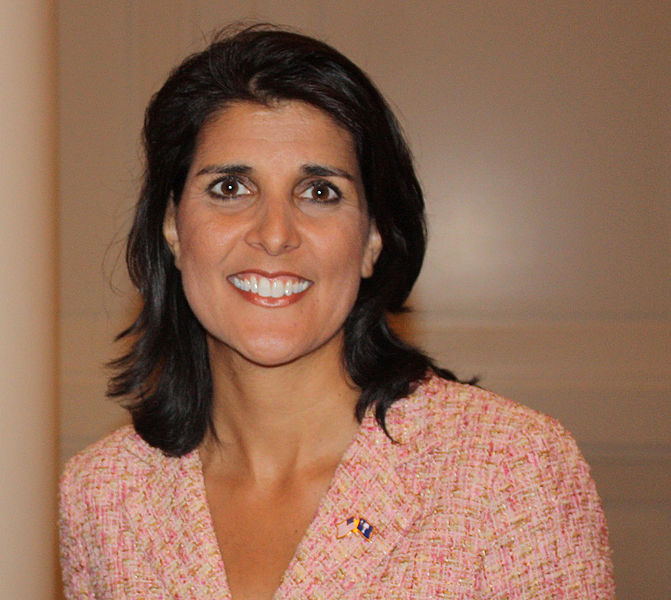
On a similar note, the national press just fell all over itself gushing about Nikki Haley when she survived a barrage of mudslinging and won the South Carolina governorship last year. Which is fine. But isn’t it about time that Governor Haley got a little national press for the $127,000 (at least), week-long, state-funded junket she took to Paris in June? She billed the trip as an attempt to attract job-creating business to South Carolina, but the details, as recounted by The (Charleston) Post and Courier reporter Renee Dudley, are pretty damning:
Haley, who captured the governor’s office preaching fiscal restraint, spent the cash so she, her husband and the rest of the state’s contingent could stay in five-star hotels; sip cocktails at the Paris Ritz; dine on what an invitation touted as “delicious French cuisine” at a swanky rooftop restaurant; and rub elbows with the U.S. Ambassador to France at his official residence near the French presidential palace. The South Carolina group also threw a soiree at the Hotel de Talleyrand, a historic Parisian townhouse where they feted foreign employers in hopes they’d set up shop in South Carolina. The Department of Commerce billed the $25,000 event as a “networking opportunity for members of the South Carolina delegation.” “It was a great party,” Commerce Secretary Bobby Hitt said in an interview last week.
After Dudley”s story, Haley classily referred to the young reporter as “that little girl” and then made a disingenuous half-apology, saying, according to The Post and Courier, “The story painted a grossly inaccurate picture and was unprofessionally done, but my ‘little girl’ comment was inappropriate and I regret that. Everyone can have a bad day. I’ll forgive her bad story, if she’ll forgive my poor choice of words.”
This is good stuff, oh national newsmen and newswomen: sexism, ageism, and hypocrisy in one tidy package that a “little girl” has tied up for you with a nice pink ribbon. Why don’t you open it up?
Texas crony capitalism, Perry style
 For more evidence that Texas governance is a banana republic in minimal disguise, take a look at this piece from Sunday’s NY Times about Rick Perry’s nonchalant/extravagant habit of doling out government money to major campaign contributors. Add it to the excellent piece I’ve already mentioned in the LA Times. Shake, stir, imbibe — and vomit.
It’s heartening that the national media are picking up this early on the absolute whorehouse that is Texas politics and on the Chief Pimp role Rick Perry has played over the last decade. I would say, “Now, it’s up to the people to decide.” But it’s not, really. It’s up to the press to continue to look at the Texas pay for play two-step.
Extending Lone Star crony capitalism into national governance via the George W. Bush administration has literally brought the country to its financial knees. It’d be nice if the national press eschewed its habitual avoidance of nasty facts about Republican candidates (driven by fear of being called the “liberal news media”) and reported the truth about corruption in Texas government repeatedly. It could help the country avert outright economic decapitation.
Filed under 2012 election, politics, presidents
The weak and compromised Governor Perry
I will write at length some other time about what I regard as truly atrocious coverage of Texas Gov. Rick Perry by national reporters who seem more interested in a clean story line about the Republican presidential horse race than in the truth of what the man says, particularly when it comes to what he says he’s done in office, particularly when it comes to the economic position of the state. The idea that the Texas economy is remarkably affected by what a Texas governor — any Texas governor — does is just silly. It cannot be overemphasized what a weak office the governorship of Texas is. Here’s a good explanation of my assertion, courtesy of the University of Texas:

Compared to the U.S. President or the chief executives of other states, the Texas Governor occupies a “weak” office. The main source of the relative weakness of the Texas Governor can be found in the historical conditions surrounding the Texas Constitution of 1876. Mindful of the experience of Reconstruction – the period after the Civil War when Republican governors wielded extensive executive powers and were resisted by conservative elites in the state – the authors of the new constitution sought to rein in future governors. They did so by dispersing power that might otherwise be lodged in the chief executive’s hands among a vast array of independently elected officials. Broad powers over the legal system, state budget and finances, education, transportation, agriculture, public utilities, and land development are delegated to officials who need not share the policies nor even be of the same political party as the governor. The dispersal of power among different officials creates what is often called the plural executive. Unlike the federal system, where the cabinet secretaries and the other top executive officers serve at the pleasure of the President, the voters elect the corresponding officials in the Texas system, giving the Governor no direct authority over them.
But today, rather than spouting torrents of bile at journalistic colleagues, I will end by sighting, in the sea of bad Perry coverage, a tropical island of solid reportage in the Los Angeles Times that deserves special commendation. If anyone thinks the power of big money and large business interests is a problem in federal governance, he or she ought to think many, many times about choosing someone coming from the Texas system to be president of the United States. As I’ve said many a time, and based on my 10 years of reporting there, Texas government is not what people in much of the rest of the country would recognize as American representative democracy. It’s a strange hybrid, in which the forms of American politics are applied as a thin, attractive veneer that masks an inner reality that is hard to distinguish from a banana republic oligarchy. The, ahem, payoff paragraphs from the Times:
Perry has received a total of $37 million over the last decade from just 150 individuals and couples, who are likely to form the backbone of his new effort to win the Republican presidential nomination. The tally represented more than a third of the $102 million he had raised as governor through December, according to data compiled by the watchdog group Texans for Public Justice.
Nearly half of those mega-donors received hefty business contracts, tax breaks or appointments under Perry, according to a Los Angeles Times analysis.
Filed under politics, presidents
Texas on Perry
I wanted to let the dust settle a bit after Texas Gov. Rick Perry jumped into the presidential race before giving  myself a victory lap for having said he would run way back when. And when. And when.
Now, rather than blurt out my estimation of Mr. Perry and his campaign, I thought I’d give a little space to some smart friends who live in Texas and actually know something about him, as opposed to the “reporters” writing about him in much of the national press. I’m going to delete names here, because I didn’t explicitly say I would identify these folks (though I did say I might use the answers on my blog). But I’ll try to give you a bit of background, so you can put what these people say in some context.
The following viewpoint comes from a longtime, expert politics-watcher and journalist whose judgement I greatly respect and who I don’t think has an ideological bone to pick:
He’s the most disingenuous fuck in American politics outside of Palin. Like her, he’s an actor, a thespian spouting lines, unexamined. There are plenty of Texas Republicans that absolutely detest the guy but are afraid of him or warily tolerate him because … he’s boss. He has a bristley, arrogant side that is pronounced and probably will be off-putting when they start in peeling his rind away. Not like Bush, at all, in the projection-of-personality department. I suppose his last big victory was due to the insane anti-Obama fevers, the economic jitters and the ineptitude of the Texas Democrats and their candidate, but his previous 39 percent showing seems more indicative of how people actually view him. I guess. I keep hearing about how much $$ he can raise, what a crack debater he is b/c he wiped up Hutchison etc., but my uneducated guess is he’s peaking now because of general boredom with the field … and he’s about to be peeled like an overripe banana. The piety thing — he closes his eyes real tight when he prays – won’t play on the wide screen, and the $$-raising corruption is a string of endless 30-second TV IEDs. So I guess that means he’s our next president.
The yang to the preceding yin as regards Mr. Perry comes from someone who’s probably been less directly involved in journalistic politics watching over the years, but he’s a smart guy, he’s been around the state a long time and his thoughts deserve, well, thought:
Although I’ve been back in Texas for some 10 years, I really have not paid that much attention to Rick Perry and his leadership in the state. As you no doubt recall, the state is very conservative and pretty much has the attitude: If you want to advance in life, get off your ass and do something. Perry is God, Country and don’t mess with Texas (or its businesses or way of life). And that’s a pretty good reflection of how a majority of people feel in the state. We have a good business climate because that’s what the people want. We don’t mess with God, because that’s what the people want. Texas is tough on crime because that’s what people want. Most of us want government to take care of the basics and stay the hell out of our lives. Do I think he’s an empty suit? No, and I think I reflect people in the state. Do I think he’s all hat and no cattle. No. He’s just a poor ranch kid who served his country as a USAF pilot and then went on to try to live the American dream. And he’s done a pretty good job, I think. For some reason, progressives believe if you graduated from a Land Grant university, served in the military and worked your way up the political ladder, you are inferior and dangerous to the Republic — You are still a dumb hick. … Here’s what I think at this date and time: Perry doesn’t want to be president. He wants to be vice president …
And this last set of comments, from a true-blue, left Texas Democrat (yes, there is a liberal Texas, even if it’s a bit attenuated nowadays), might seem surprising in its estimation of Perry’s strength. But this comes from a real political pro:
My insight on Perry comes from experiencing his advance team and travel squad. This year Gov. Perry came [to Houston] for a joint press conference on an anti-human trafficking bill sponsored by two Democratic women legislators. Perry’s advance and travel team is Presidential class. They have traveled together in a very large state for more than a decade.
More, as they say in my profession, TK.
Filed under politics, presidents
It’s the story, stupid
I tend not to link to the NY Times because I know smart people read it as a matter of routine, and you, gentle readers, are among the smartest in existence. But in the Sunday Times, Drew Westen offers a truly distinguished explanation of President Obama’s signal failure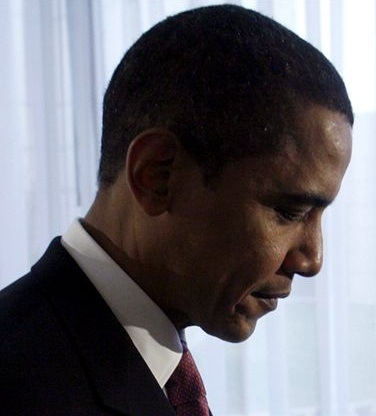 — the failure to tell the American people the story of the man-made disaster that has befallen them, and how they will transcend it. I have great admiration for the Times’ Week in Review (even if I find no benefit in it’s new name, Sunday Review), but Westin’s piece, “What Happened to Obama,” operates several levels above the average Review piece, melding history, psychology and practical politics (trained in the psychological sciences, Westen has of late been paying the rent as a “messaging consultant to nonprofit groups and Democratic leaders”) in a piercing and absolutely convincing argument that Obama has failed the first duty of leadership: storytellng. After explaining, in a historical/evolutionary context, why it is that subjects expect their leaders to explain the world in a narrative format, Westen offers this story that I (and I suspect a vast majority of Americans) have longed to hear from the presidential podium:
“I know you’re scared and angry. Many of you have lost your jobs, your homes, your hope. This was a disaster, but it was not a natural disaster. It was made by Wall Street gamblers who speculated with your lives and futures. It was made by conservative extremists who told us that if we just eliminated regulations and rewarded greed and recklessness, it would all work out. But it didn’t work out. And it didn’t work out 80 years ago, when the same people sold our grandparents the same bill of goods, with the same results. But we learned something from our grandparents about how to fix it, and we will draw on their wisdom. We will restore business confidence the old-fashioned way: by putting money back in the pockets of working Americans by putting them back to work, and by restoring integrity to our financial markets and demanding it of those who want to run them. I can’t promise that we won’t make mistakes along the way. But I can promise you that they will be honest mistakes, and that your government has your back again.”
Westen points out, rightly, one of Obama’s largest narrative failures — the failure to explain who the bad guys are, and how they are going to be brought to justice — and ends the piece with a brilliant series of hypotheses, each less flattering than the last, about why Obama “seems so compelled to take both sides of every issue.” I won’t explain them here; you really must read this whole piece to understand their full brilliance. But in an attempt to get you to go read this article, I will leave you with its kicker, which plays off the Rev. Martin Luther King’s assertion that the long arc of history bends toward justice, and which is thrilling in its denunciation of the deformed compromise that threatens to become the hallmark of the Obama era:
“But the arc of history does not bend toward justice through capitulation cast as compromise. It does not bend when 400 people control more of the wealth than 150 million of their fellow Americans. It does not bend when the average middle-class family has seen its income stagnate over the last 30 years while the richest 1 percent has seen its income rise astronomically. It does not bend when we cut the fixed incomes of our parents and grandparents so hedge fund managers can keep their 15 percent tax rates. It does not bend when only one side in negotiations between workers and their bosses is allowed representation. And it does not bend when, as political scientists have shown, it is not public opinion but the opinions of the wealthy that predict the votes of the Senate. The arc of history can bend only so far before it breaks. “
Filed under 2012 election, politics, presidents
Is the president a damaged hostage?
In general, I think Barack Obama has done a remarkable job as president during a time of unprecedented economic, security and political challenges. That’s to say, I disagree with some specific policies he’s followed — chiefly, the decisions to send additional troops to Afghanistan and, post-bin Laden, not wind down the war there very quickly — but think him a steady, strategic thinker and doer. Most Republicans, of course, have an entirely different view, but I find many and even most of the policy objections coming from Obama’s right insince re, disingenuous. At base, it seems to me that Republicans do not differ with Obama’s policies, which are quite moderate on the whole and even a shade toward the right here and there; they object to his existence. They simply want a Republican president and, it seems, will go to almost any length to get one. There are also objections to Obama’s leadership that come from his left. Most of them I put in the Unicorn League folder — meaning they complain that Obama hasn’t done something that will be accomplished only when the huge and secret population of publically spirited unicorns comes out of hiding and parades in neat rows from the White House to Capitol Hill. But here’s a post sent along by a friend about the “Barackholm Syndrome,” making a clever point that deserves at least consideration. That is: Has the scope, unanimity and persistence of the Republican opposition to anything — anything! — the president wants affected his psyche and made him less willing or able to press his own agenda aggressively? Going this intellectual route, of course, risks descending into psychobabble. Still, I thought the post by Robert Hall fascinating and worth a read (h/t Terry O’Rourke).
Filed under politics, presidents
Perhaps the president could use a jar
When you have peanut butter that’s this robust, well, you just have to go with it.
Filed under politics, presidents
 John Mecklin, writer/editor