The rhythm of the algorithm


If  you ever wonder where the balance of human and machine intelligence is headed in general, you’ll want to read this piece, “How to Make Money in Microseconds,” in the London Review of Books.” I think most people know, by now, that a lot of market trading is now controlled by computers that place buy and sell orders on the basis of algorithms. This essay goes well beyond that generality to describe exactly what the algorithms do, and in so doing takes a reader down an engaging if increasingly unreal rabbit hole full of statistical arbitrage, volume participation, volume-weighted average price (or VWAP, pronounced vee-wap), and even more arcane and predatory types of algorithms. Such as these:

Far more controversial are algorithms that effectively prey on other algorithms. Some algorithms, for example, can detect the electronic signature of a big VWAP, a process called ‘algo-sniffing’. This can earn its owner substantial sums: if the VWAP is programmed to buy a particular corporation’s shares, the algo-sniffing program will buy those shares faster than the VWAP, then sell them to it at a profit. Algo-sniffing often makes users of VWAPs and other execution algorithms furious: they condemn it as unfair, and there is a growing business in adding ‘anti-gaming’ features to execution algorithms to make it harder to detect and exploit them.

This is an extraordinarily detailed and well-balanced piece that includes no fear-of-computer troglodytism but still argues that computerized trading has become a ” tightly coupled and highly complex” system that probably is, therefore, “inherently dangerous.” Call me fascinated, Hal.

Leave a comment

Filed under computer algorithms, London Review of Books, market trading, markets

The Reagan Centennial


By absolute accident,  I went to the Reagan library on the centennial of his birth, 5/15/11. It’s a triumph of propaganda, Hollywood and the best PR talent money can buy. I highly recommend it to any student of the power of narrative. I cannot even begin to describe the professionalism of the video  and interactive display there — and it’s almost all video or interactive display — and the ability of people focused on a mission to distory or ignore factual reality. The most interesting facet of that factless reality: By this account, George H.W. Bush never existed, and Iran Contra consisted entirely of Ronald Reagan’s last, self-serving “mistakes were made” explanation of it. I’ll write more on this place, because it’s fascinating, not least because of its mountaintop location. But right now, I thought I just show what it will look like when I’m president and in the door of Air Force One. Coming in, what, 2016 or so.

Leave a comment

Filed under Reagan centennial, Reagan Library, Ronald Reagan

But do you get to use an F-18 on the fast break?


If you have a college basketball game being played on an aircraft carrier, you go with it.

Leave a comment

Filed under Uncategorized

The View from the Moonwalk


Jed Horne, a former New Orleans Times-Picayune metro editor who helped the paper win the Pulitzer for coverage of Hurricane Katrina, has a nice piece over at The Daily Beast that explains why the Mississippi flood probably won’t drown New Orleans.  The piece ably explains why the flood will likely stay six whole inches below the top of the riverside levees that protect the city — basically, the Corps of Engineers will open two giant spillways to divert floodwaters south to the Atchafalaya basin and, in the second case, into Lake Ponchartrain and out to the gulf. But I call it “nice” because Horne has both an encyclopedic knowledge of place and a real way with words. To wit:

Except for the city’s habitual nonchalance—subtropical torpor?—this is nothing like Katrina. As tributaries to the north backed up into farmland, and residential neighborhoods sandbagged furiously against rising water, New Orleans danced and drank through the second of two JazzFest weekends, then rose a bit groggily on Monday to begin opening the bays on the Bonnet Carre Spillway, a giant escape valve 30 miles upstream.

It’s a relatively short piece, but it does a better job of taking you “there” —  to the river itself, which “was only that much more amazing to habitues of the Moonwalk, a populace that includes homeless and hippies as well as the well-heeled, given how startlingly low the river was just a few months back” — than other flood coverage I’ve seen, even coverage full of flooded-out Arkansas farmers losing their entire crops. That sense of reality ‘s the difference a real writer with an eye for detail brings to anything he describes, and the reason real writers will always be worth a lot of money, whether their visions are conveyed in ink or pixels or videography.

Leave a comment

Filed under Bonnet Carre Spillway, Mississippi River flooding, New Orleans, New Orleans Moonwalk

Chinatown, the sequel


There’s a doozy of a battle being waged right now over the future, or lack thereof, of California’s high-speed rail project, which, if it’s ever built, would connect San Diego, L.A., the Central Valley, the Bay Area and Sacramento. The battle’s being written about fairly regularly in the California and even the national press. But I think a major piece of the picture is being missed. On Wednesday, the California dailies came out with stories about the latest skirmish in the high-speed rail fight, a report by the supposedly nonpartisan state legislative analyst on the project. Here’s the nub of the San Francisco Chronicle’s take:

California should eliminate the independent agency overseeing its planned high-speed-rail system and hand over development of the project to Caltrans, the nonpartisan legislative analyst concluded in a report issued Tuesday.

The state should also consider scrapping its current plan to begin construction on the system with 140 miles of track in the Central Valley – a change that would require approval from the federal government. Instead, officials should consider building the first portion of the system in either Northern or Southern California, or between the Bay Area and the Central Valley, the report says.

As the Legislature weighs these changes, it should slash funding for the project from the requested $185 million next fiscal year to just $7 million, the Legislative Analyst’s Office report additionally recommends.

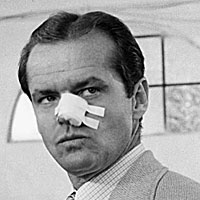
Stories in the NY Times, San Jose Mercury-News and Sacramento Bee were similar, and I can’t fault reporters on deadline for parroting an official report that seems to cast doubt on both the management of this multibillion-dollar project and the project’s financial viability. There are legitimate questions about whether the federal government will ever provide the more than $30 billion (minimum) needed to complete the project. And the high-speed rail authority that is now managing the project has been disingenuous about operating costs, IMHO. No matter what the authority says, it is very unlikely this rail system can operate without a continuing subsidy from the state, and the state is absolutely dead broke. But something else is almost certainly going on here, and I think it’s best described by analogy. When I was a reporter covering the county government for the Houston area, the nexus of governmental shenanigans involved infrastructure that drove development. Highways and flood control projects were regularly built in ways that just happened to drain otherwise undevelopable land and put freeway exits right in the center of those newly dry tracts, thereby increasing the value of that favored property by huge multiples. The land, post-infrastructure improvements, was sometimes worth 20 or 30 times what it had been purchased for, or even more, and the original purchasers always happened to have connections to government. Now, let’s switch from highways to high-speed rail: How much do you think decaying, tenantless downtown property in Nowhere, California, will be worth if  a glitzy new high-speed rail station goes into the center of that otherwise godforsaken Central Valley burg? How much more desirable is it going to be to live in the Central Valley, if you can hop on a train and be in LA or San Francisco in an hour or so? The California high-speed rail project is, at its core, a development scheme. Wherever there’s a station, apartments and stores and bars will spring up — and whoever owns the property and the rights to develop there will make a fortune. If control of the high-speed rail project is taken away from the authority created when voters approved the rail plan and given to the state transportation department, and if the first segments of the line are built in the Bay Area or L.A., then, obviously, different landowners and developers are going to make money than if the authority is allowed to continue to start the rail line in the Central Valley.  We’re talking the kind of money that makes Chinatown look like a small-time hustle, and it’s about time someone started talking — and writing — about the grafting possibilities here.

Leave a comment

Filed under High-speed rail, Jack Nicholson

Somehow, Santa Barbara didn’t make the list


When you have a post-grad hipster’s guide to inhabitable U.S. cities, you go with it.

Leave a comment

Filed under best cities, hipsters, You go with it

Felix the financial cat


If you are lucky enough to have enough money to have hired a financial adviser, you ought to read this Felix Salmon post, which nicely explains the many little bites of your money that an FA can take, almost imperceptibly. (Actually, if you’re interested in finance, you ought to read Felix all the time; you can call what he writes a blog, but it’s a blog based on a breathtaking amount of reportage and activity. Sometimes I wonder whether he’s cloned himself, perhaps more than once.) At the end of the day, a financial adviser ought to make you enough money that the fees he charges are an afterthought. But that’s seldom, seldom the case, this writer wrote, remembering with something less than fondness some financial things past….

Leave a comment

Filed under banking, Felix Salmon, finance, Reuters

To kill the mockingbirds


My cats are pathetic hunters, stalking birds so clumsily and slowly that you can often actually see a bird cock its head and look right at the cat, as if to ask, “Do you really think I can’t see you because you’ve crouched down in the middle of the patio, 20 feet from anything like cover?” But I’ve always watched during the day.  Now here’s a University of Florida study that says cats are veritable mass murderers of mockingbirds, and there’s video to convict them. The surveillance was done on mockingbird nests, which, apparently, cats are fond of raiding at night. I think it unlikely that my two half-Siamese would find a mockingbird nest, day or night, but video is video. The takeaway: Save the birds. Keep your cat in at night.

1 Comment

Filed under cats, environment, mockingbirds, urban affairs

Tina and Tomasky


I guess I’ve been remiss in my following of media comings and goings; I hadn’t seen that Michael Tomasky, a great liberal blogger for the Guardian, has moved over to be a columnist for Tina Brown and Newsweek/The Daily Beast. It’s truly a great get for Brown. I can’t say whether it’s a good or bad move for Tomasky, given the up-in-the-airness of the NewsBeast experiment. But I salute his willingness to take a chance. He’s always worth reading, and I’m certainly going to be following him in Tina-land. Where I hope he’s just an amazing success, because — leave the ideology out of this — his is a first-rate mind. It’s just so damn heartening to see that kind of thoughtfulness rewarded.

Leave a comment

Filed under Newsweek, The Daily Beast, Tina Brown

Twain Spotting


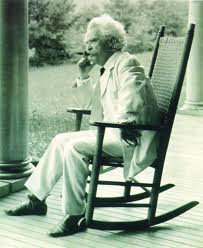
I suppose it is stating the obvious to say that the modern American novel was birthed along the Mississippi by Mark Twain and then — after some dashes of Stendhal and Tolstoi and the other major Russians were mixed in — brought to successful adulthood by another nobody from what we now consider fly-over country, Ernest Hemingway.  I also suppose the preceding, commonplace assertion will stir foment in the Webosphere among the adherents of Faulkner and Fitzgerald and Bellow and Updike and God knows what other 20th century American writer people will come up with as more seminal to the novel than Hemingway. And that’s fine by me; I have lots of favorite writers. But I do think this essay on the recently released piece of Twain’s “autobiography” in the London Review of Books is remarkably evocative of Twain and the best evaluation/explication of the work I’ve read. In makes one want to head over to the mother of rivers, even or especially during these high-water times, just to watch the water roll by. It also makes one want to dig around in the book boxes to find that copy of Huckleberry Finn and begin one’s seventh or 10th rereading of that masterstroke. During the digging, if one were to see the Nick Adams stories poking up from the stack, one might grab it, too. There is a connection there, as powerful as a river cresting.

1 Comment

Filed under Ernest Hemingway, literature, London Review of Books, Mark Twain