Some things to occupy yourself with


Although I think the Bulletin of the Atomic Scientists a wonderful publication, it is undeniably specialized and wonkish. If you want the most in-depth, expert information available on existential threats to life on Earth, the Bulletin is where you go. You do not go to the Bulletin for critical assessment of a Lady Gaga performance, much as I like Lady Gaga.
Because this blog generally deals with subject matter somewhere between Gaga and Doomsday, I do not link to all of the Bulletin‘s content by any means.But this piece, by Mark Cooper of the Center for Energy and the Environ-ment at Vermont Law School, raises important questions, such as: Why is the US government acting as the unlimited liability insurer for the nuclear industry, putting taxpayers on the hook for damages that could exceed $1 trillion in a single nuclear accident? This is an important story that market-based, conservative publications (do you read me, Wall Street Journal?) ought to pay particular attention to.

And as long as we’re talking about Wall Street and ridiculous govern-mental subsidies for well-connected industries, I thought I’d link to this stirring video from Occupy Everything. (I tried to embed the video, but the code just won’t work, alas.) I’m not anti-capitalist, but I am pro-fairness, and the system has tilted too far toward the wealthy one percent, and too far from the rest of us. I understand why people have gone to occupy Wall Street. I hope they stay for an unreasonably long time

.

1 Comment

Filed under nuclear energy, politics

The shame of the New Orleans Times-Picayne


I worked for a long time in daily newspapers and understand the pressures of delivering an account of something one knows little about in a very short time. I also understand the basic frightened stupidity of your average assistant city editor, who will always lead the news in the direction of appeasing the powers that be. But this story in the New Orleans Times-Picayune is a journalistic travesty, even by the low standards of the Times-Picayune.

Let’s track back a bit. Here are the basics of a previous post of mine about my brother-in-law, Folwell Dunbar (conflict alert: yes, he’s my brother-in-law), caught in the act of serving the public interest:

You could put this one in the “no good deed goes unpunished” file, or simply roll your eyes, sigh and mutter “Louisiana” on the exhale. If you read my last post, you know my brother in law, Folwell Dunbar, is a public-interest hero. While working at the Louisiana state agency that regulates charter schools, Folwell reported being offered a $20,000 bribe by someone apparently connected to Abramson Science and Technology Charter School in New Orleans, which he was in the process of auditing. Folwell turned down the bribe and did exactly what a good public servant should do — he wrote a report documenting the offer, and he reported the attempted bribe to the police. During the audit, he found the school had been grossly mismanaged and recommended that the state board of education take away its charter.

The state did nothing for a year, but then the New Orleans Times-Picayune dug up Folwell’s report via a public records request and wrote a story about it. Suddenly, the state decided it was time to suspend the school and investigate its performance.

But because this is Louisiana, Folwell did not receive the award or promotion he deserved for doing his job well and ethically and bringing a problem to light in the proper way, so it could be dealt with. Instead, a few days after the original Times-Picayne report (which, by the way, Folwell had no role in inspiring), he was fired with no real explanation.

Now, because the state education department has written a posterior-covering report, the Times-Picayune has written a story parroting the official, ridiculous line that Folwell was the problem, somehow. Here’s the unquestioning, clueless bottom line, as recounted by the Times-Picayune:

The [state education department has] tentative plans to transform its charter office, known as the Office of Parental Options, into more of a policing arm rather than a means of providing support for schools. In fact, that process began shortly after the Abramson case hit the news, when the department fired Folwell Dunbar, who served in the charter office as an academic adviser. Responsibility fell to Dunbar for both investigating the accusations against Abramson and helping the school improve, state records show. In its report … the department makes clear that it will look to draw more of a line between those roles. Without mentioning Dunbar by name, the report says, “The previous field staff position, which focused on academic support of charter schools, will transition to a charter monitoring role.” Instead of an academic adviser, the department plans to hire a “school accountability and oversight manager.”

This story is not just a journalistic travesty — and yes, I’m calling out the so-called reporter, Andrew Vanacore, directly on this — it’s a public dis-service. Any reporter worth his journalistic salt would question, just a bit, the premise here. A state employee reports a bribe offer from someone connected to a substandard charter school and recommends that the school be closed;  just as he should, the employee reports the bribe offer to law enforcement. This response qualifies for “heroic” status, especially in Louisiana, where whistleblowers are an endangered species. After reporting on Folwell’s heroism just two months ago, the Times-Picayune now has decided, because state officials who are attempting to cover up their failure to deal with a problematic school issue a report blaming the messenger,to fall right in with the official, incredible line. Yes, the whistleblower who reported wrong-doing was the problem. An ephemeral shuffling of the bureaucratic chairs will solve everything. Pigs will fly any day now.

The problem here isn’t some unfortunate overlap of regulatory roles. The problem is that someone connected to a bad charter school tried to bribe an honest state employee — and now the state wants to scapegoat that employee for doing exactly what a decent public servant ought to have done.  Shame on the Times-Picayune, and on Vanacore.

Let me repeat it here, so there’s no misunderstanding: Folwell Dunbar is my wife’s brother. I have  a conflict of interest as I write this post, because I think I know Folwell pretty well, and I think he’s more honest than the longest day of the year is long. But it wouldn’t matter if I didn’t know him from Adam Sandler. This Times-Picayune “report” is baseless smooching of the powers-that-be, and it includes holes an M1 tank could drive through. Why did it take state education officials a year to respond to Folwell’s report saying the charter school should be closed? Why did they respond only after his report was made public, through no effort of his own? Why didn’t the state education department report the attempted bribe to the FBI? Is the FBI investigating this situation?

I’d write “shame” here, except that I suspect the Times-Picayune is unshame-able. Comments on this alleged “story” and letters to the editor would seem to be in order.

1 Comment

Filed under Uncategorized

Updated wedges. (Climate change, not golf.)


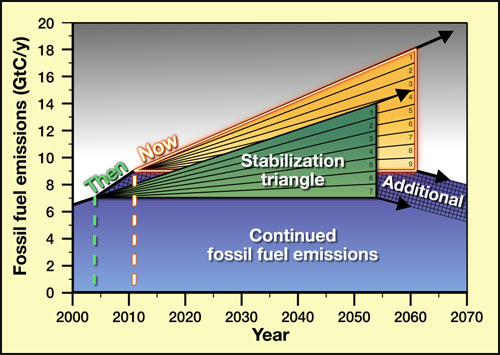
Enviro friends will all know about Robert Socolow and his paper back in 2004 (with Steve Pacala) about the seven categories of action that could be taken with existing technologies to stabilize the amount of carbon dioxide in the atmosphere in 50 years. These categories, or wedges, of mitigation of global carbon emissions became famous and have largely defined the climate change discussion ever since–at least among the fact-based folks who have rational discussion about climate change as science, rather than a liberal political plot.

Today, Socolow reaffirms and updates that original wedges paper–and provides suggestions for improving the terms of climate change debate–in an essay simulaneously published by my employer, the Bulletin of the Atomic Scientists, and Climate Central. (Socolow, a Princeton University professor, is also a Bulletin Science and Security Board member.) Comments by something of a Who’s Who of major climate scientists are appended to the essay.

This is not just important thinking. Professor Socolow can write, too. This one is worth your time.

Update on the wedges update: Over at the NY Times Dot Earth blog, Andrew Revkin has a lengthy take that includes a lot of wedges background that will be interesting for less-than-fanatic followers of the climate change debate. And even enviro insiders will likely find something of value here; that Revkin is one walking and writing environmental encyclopedia.

Update #2 on the wedges update: The Atlantic‘s inimitable Jim Fallows wrote about Socolow’s essay as well today, along the way providing the usual trove of Fallowsian added value, including a link to a past story of  his, “Dirty Coal, Clean Future,” that is sure to enrage environmentalist coal-haters–or, perhaps, to make them think. After linking to the Bulletin and Climate Central postings, Fallows mentioned this blog, which was unexpected. Thanks, Jim.

1 Comment

Filed under environment

The best grizzly bear story you’ve read this year, I bet


Now here’s a story that absolutely will — has to — go national. A 25-year-old “wrangler,” Erin Bolster, leading a trail ride in Montana saves an 8-year-old boy on his first such ride from a grizzly attack, with the help of her mongrel, but gigantic horse Tunk. The (Spokane, Wash.) Spokesman-Review provides all the details in an absolutely charmingly homespun account that includes these stirring sentences:

“The boy was bent over, feet out of the stirrups, clutching the saddle horn and the horse’s neck,” she said. “That kept him from hitting a tree limb.

“But all I could think about was the boy falling off in the path of that grizzly.

“I bent down, screamed and yelled, but the bear was growling and snarling and staying very focused on Scout [the horse the boy was riding].

“As it tried to circle back toward Scout, I realized I had to get Tonk to square off and face the bear. We had to get the bear to acknowledge us.

“We did. We got its attention – and the bear charged.

“So I charged at the bear.”

Did she think twice about that?

“I had no hesitation, honestly,” Bolster said. “Nothing in my body was going to let that little boy get hurt by that bear. That wasn’t an option.”

Tonk was on the same page.

But you have to read the whole piece. It is thrilling, heartwarming and wonderfully crafted; tour de force is not too strong a description. Congratulations to the writer, Rich Landers. (h/t Hal Herring)

Leave a comment

Filed under heroism

Where to stick your class warfare


If you don’t know Elizabeth Warren, or don’t think she’s going to be the next U.S. senator from Massachusetts, you haven’t seen this video, which puts the “class warfare” schtick the Republicans have been retailing of late into a Mixmaster and pushes the “puree” button. (h/t Greg Sargent/Washington Post).

1 Comment

Filed under politics

They’re just like frat boys


When you come across an article with the headline, “Deep-sea Squid Mate Indiscriminately,” and then, reading into it, find this wonderful bit of sexy description…

In the deep sea, scientists suspect that squid courtship involves little romance and lots of pirate warfare. When males spot a passing female, they smear them with sperm-laden globs called spermatophores, using obscenely long organs. Once plopped down, the spermatophores likely burst open, releasing clingy sperm pouches that then glom onto the female’s torso and tentacles.

…well, what’re you going to do? Go with it, of course.

Leave a comment

Filed under Uncategorized, You go with it

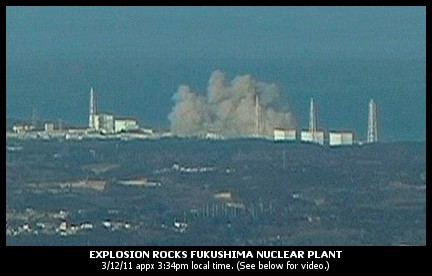
The truth about Fukushima. In English and Japanese.


The Bulletin of the Atomic Scientists posted its Fukushima issue today, which I think has a lot of interesting/deep/new pieces written by leading experts about the nuclear disaster in Japan. (Such as “Fukushima: The myth of safety, the reality of geoscience,” which shows that in the decades after the nuclear plant was built, the authorities discovered historical records and other science that showed Fukushima was vulnerable to a giant tsunami, but they did nothing to protect the plant.)

And the Bulletin did something even cooler than good in-depth journalism: It translated these expert analyses of the Fukushima catastrophe into Japanese. This is how Bulletin editor Mindy Kay Bricker explains the reasoning behind translation project: “Those in genuine need of erudite analysis are, of course, those directly affected by the Fukushima disaster, the Japanese population. Stellar coverage by Western news outlets might win awards, but what is the point if those who most deserve the information never benefit from reading it?”

Bricker’s piece announcing the Fukushima issue is here. The Japanese translation of the Fukushima issue is here. The table of contents for the Fukushima issue is here.

Leave a comment

Filed under nuclear energy

A farewell to smarm


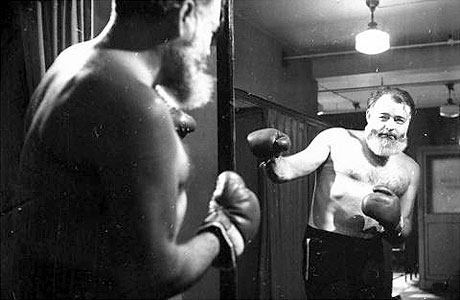
I have to admit that I wrote this post mostly so I could to link to a Rand Corp. report named with an awful play on a Hemingway book title. Yes, gird yourself, here it comes: For Whom the Whistle Blows. And I truly do not recommend that you plow through the entire report, which is written with all the panache for which Rand prose is famous. No Robert Jordan or his rabbit in the rucksack here.

Still, the report does offer a nice reminder of one good thing that came out of the Obama administration’s reaction to the 2008-09 financial meltdown, which is this:

In July 2010, President Barack Obama signed into law the Dodd-Frank Wall Street Reform and Consumer Protection Act, a lengthy statute that included a new mechanism for offering bounties to internal corporate “whistleblowers” who report instances of fraud to the SEC. Under the statute, such whistleblowers are entitled to an award (or “bounty”) of between 10 and 30 percent of any penalties or fees imposed in amounts greater than $1 million. … Perhaps the single most contentious feature of the new Dodd-Frank whistleblower regime is that the rules do not require that a corporate insider first make use of his or her company’s internal reporting channels as a prerequisite for access to the SEC and any potential award under Dodd-Frank.

Giving insiders a cut of the recovery if they rat out big-time, white-collar crooks is good, smart policy. So I suppose Rand’s focus on the poor, poor corporate leaders who will no longer be able to keep whistleblowers in-house, where they can be tortured and discredited more directly and efficiently than might be possible if they get to the SEC first, might irritate some of you. I just found it humorous, and a good sign that the plutocrats are scared of a law that, if it is to work to keep the investment banking industry from bankrupting the world, needs to be very, very scary to plutocrats.

Oh, about that “farewell” in my headline: I do indeed promise to refrain from Hemingway puns and wordplay. For at least a month.

1 Comment

Filed under corruption, finance

Everywhere, any way, all the time. (Sorry, Googlers; this is about news, not sex.)


It’s a little vague on some points, but this Newsonomics post is the first I’ve read in a long time about making money via publishing news that seems to be within a couple of miles of the mark. Oh, sure, it’s also a little gimmicky, with its 1,2,3,4 shtick [i.e., one brand, two revenue streams (ads and people), three products (print, computer and mobile) and 4G (faster connectivity)]. But the explanations of those bullet points are generally smart and deep, viz. this from the brand section:

Steve Jobs’ tablet-launching assertion that search is so yesterday was part sales pitch, part prophecy. The app is nothing if not the re-ascendance of brand, encapsulated in a few pixels. These tiny apps — from ESPN, The Atlantic, Time, the Guardian, and Berliner Morgenpost to The Boston Globe, The New York Times and the Wall Street Journal — all convey new promise. That promise has found a business model — all-access — to accompany. After years of wandering in the wilderness of customer confusion and self-doubt, news companies are saying: “You know us, you know our brand; you value us. Pay us once and we’ll get you our stuff wherever, whenever, however you want it”. Call it “entertainment everywhere” or “news anywhere,” or “TV Everywhere,” major media are now re-training their core audiences to expect — and pay for — ubiquity.

I will mention one more positive from the piece — it’s concise and correct observation that newspapers are going to have to include a lot more video/multimedia if they are going to stay in the game in these new digital times — and then let you read it yourself, in all its sophisticated, well-reasoned and well-written … no, not glory … let’s just say competence.

Leave a comment

Filed under media

Surf’s up. And up. Etc.


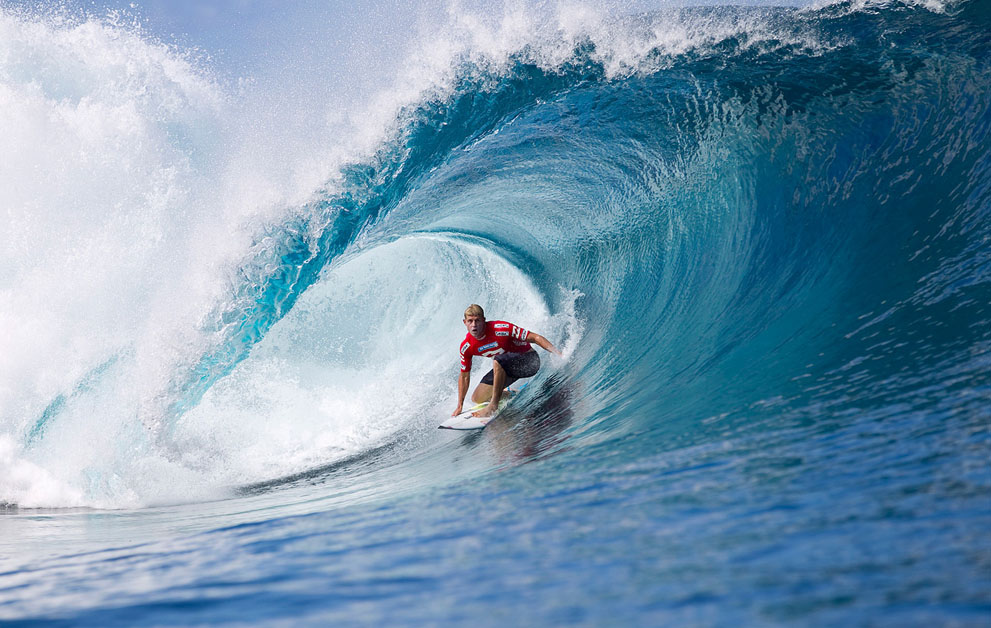
When you  have surfing photos that make you stare and click and stare and click, as these do, even though you live minutes from Rincon, you just have to go with them. (h/t Jim Fallows)

Leave a comment

Filed under surfing